Tottenham’s Goal-Scoring Crisis: Do Spurs Simply Need Time to Gel?
Tottenham Hotspur’s start to the 2026/27 Premier League season has been anything but straightforward.
Four Premier League games have produced two points, zero goals and zero wins, leaving Roberto De Zerbi’s side sitting 17th in the table after the opening international break.
For a club that spent heavily during a remarkable summer transfer window, the lack of attacking output is understandably causing concern.
Yet there is another side to the story.
While Tottenham’s attack has become the obvious talking point, there have been signs that the team is beginning to look more organised defensively. The bigger question is whether Spurs simply need time for a radically rebuilt squad to understand De Zerbi’s football — or whether the lack of goals points towards a much deeper problem.
Tottenham’s 2026/27 Premier League results so far
Tottenham’s opening four league fixtures have been:
- Brentford 3-0 Tottenham – 22 August
- Tottenham 0-2 Newcastle United – 29 August
- Nottingham Forest 0-0 Tottenham – 5 September
- Tottenham 0-0 Everton – 12 September
The first two matches exposed defensive and organisational problems.
Against Brentford, Spurs were beaten 3-0 and failed to register a shot on target during the first half. Against Newcastle, Tottenham again struggled to turn possession and attacking pressure into goals, eventually losing 2-0.
Since then, however, something has changed.
Back-to-back 0-0 draws against Nottingham Forest and Everton have at least demonstrated greater defensive resilience.
The problem is that Tottenham have not been able to turn that defensive improvement into positive results.
According to Premier League statistics, Spurs have scored zero goals in their first four league matches, while conceding five. Their league record currently stands at two draws and two defeats.
Most significantly, this is the first time in Tottenham’s history that they have failed to score in each of their opening four Premier League matches of a season.
That statistic alone explains why supporters are becoming increasingly frustrated.
Tottenham’s biggest problem is obvious: goals
There is no complicated way of dressing it up.
Tottenham cannot score.
The club’s summer recruitment was supposed to address exactly this issue. Instead, Spurs have now gone through their opening four league fixtures without finding the net.
The drought has become particularly concerning because it is not simply a case of one unlucky result.
Against Nottingham Forest, Tottenham had 12 shots but failed to register a single attempt on target. Despite enjoying 59% possession and winning 10 corners, Spurs could not turn their dominance into a goal.
Against Everton, there were again periods when Tottenham controlled possession and pushed the visitors back, particularly during the opening stages.
But the final product simply wasn’t there.
The movement around the penalty area has lacked consistency, the final pass has often been missing and, when opportunities have arrived, Spurs have not been clinical enough.
That is perhaps the most frustrating aspect of the situation.
There are talented attacking players in this squad.
The problem is getting them to function as an attacking unit.
Is Tottenham’s defence finally improving?
Interestingly, this is where there is at least some reason for optimism.
After conceding five goals in the opening two Premier League games, Tottenham have kept consecutive clean sheets against Nottingham Forest and Everton.
That might not sound spectacular, but considering the number of changes made to the squad over the summer, it represents progress.
The Forest game was particularly encouraging from a defensive perspective. Tottenham controlled large periods of possession and limited Forest’s attacking threat, although a disallowed Neco Williams goal served as a reminder that Spurs were not completely comfortable throughout the match.
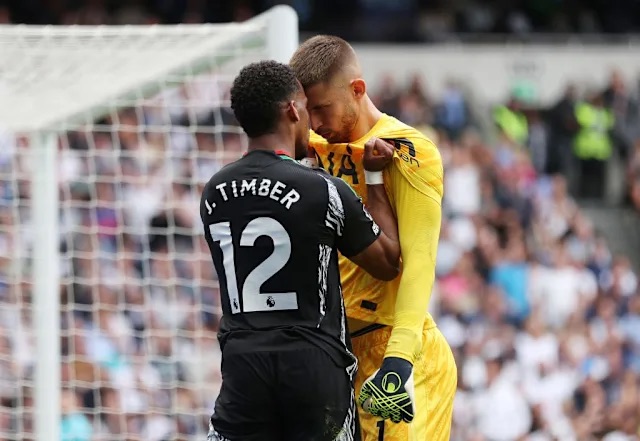
Everton also created opportunities, but Spurs goalkeeper Antonín Kinský produced important saves, while Micky van de Ven and the new-look defensive unit helped prevent the visitors from scoring.
There is still plenty to improve.
But the difference between the Brentford defeat and the two subsequent clean sheets is noticeable.
The foundations may be starting to appear.
The issue is that Tottenham currently have no attacking platform to build upon those foundations.
Tottenham’s summer rebuild was enormous
It is impossible to analyse Spurs’ current situation without considering what happened during the summer.
Tottenham effectively rebuilt large sections of the squad.
The club brought in players including Sandro Tonali, Mateus Fernandes, Sávio, Jan Paul van Hecke, Omar Marmoush, Andy Robertson, Marcos Senesi, Mohammed Kudus, Tosin Adarabioyo and Mykhailo Mudryk.
The official Premier League squad list confirms just how different the squad now looks, with major additions spread across defence, midfield and attack.
Reports put Tottenham’s summer spending at around £380m-£394m, depending on how transfer obligations, add-ons and deals are calculated. Spurs Web reported ten new signings and total spending of £394m , while The Times reported approximately £380m.
Whatever figure is used, the conclusion is the same:
Tottenham underwent a huge rebuild.
And that matters.
A team cannot completely overhaul its midfield, defence and attack, introduce a new manager and then expect everything to click immediately.
Tottenham need time to gel — but how much time?
This is where the argument becomes more complicated.
There is a perfectly reasonable case for giving De Zerbi and his new players time.
Sávio and Omar Marmoush only arrived towards the end of the transfer window. Marmoush’s move from Manchester City was confirmed on a season-long loan with an obligation to make the transfer permanent, and he only became available shortly before the Newcastle match.
Other players have also had disrupted preparations.
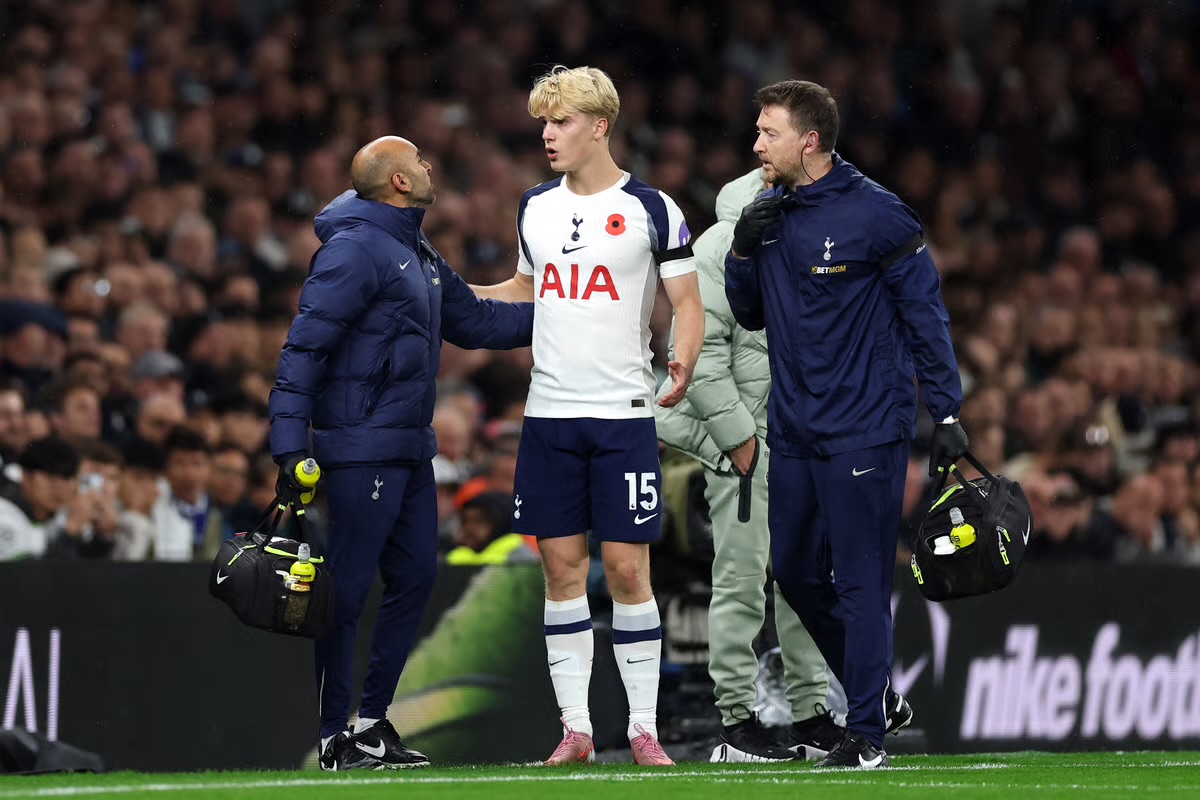
Mohammed Kudus has been dealing with injury problems, while players such as Dejan Kulusevski, Pedro Porro and others have also faced fitness issues.
Then there is the question of the World Cup.
The 2026 World Cup has disrupted the traditional summer preparation period, with some players arriving back later than usual and others carrying different levels of match fitness into pre-season.
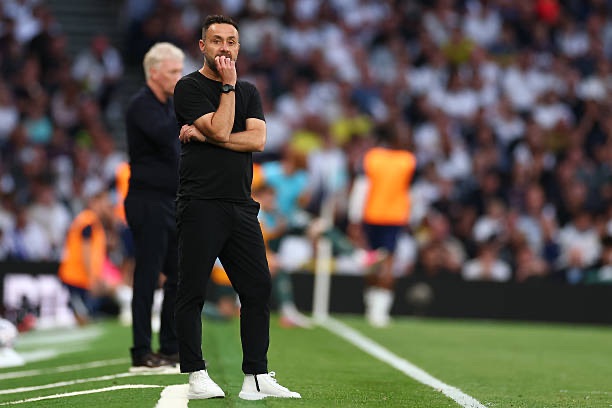
De Zerbi himself has pointed towards fitness, injuries, late arrivals and the need for the players to understand his system as reasons behind Tottenham’s difficult beginning.
There is therefore a legitimate argument that Spurs are still a work in progress.
But Tottenham cannot hide behind the rebuild forever
This is the other side of the argument.
Tottenham did not simply make one or two additions.
They spent hundreds of millions of pounds and recruited players specifically to improve the team.
At some point, the rebuilding process has to produce results.
The concern is not simply that Tottenham have failed to score four games into a new season.
It is how they have failed to score.
Against Forest, Spurs had possession but couldn’t register a shot on target.
Against Everton, there were promising periods but the attacking momentum repeatedly disappeared.
The problem appears to be occurring in the final third.
Players are getting into positions without consistently making the correct decisions. Runs are not always being spotted. Passes arrive too late. Crosses lack quality. Shots are either not being taken or are not being converted.
That is less about luck and more about attacking chemistry.
Dominic Solanke is crucial
One player who could have a major influence on Tottenham’s season is Dominic Solanke.
The striker arrived from Bournemouth for £55m and enjoyed an outstanding 2023/24 campaign.
But injuries and a lack of consistent minutes have disrupted his progress at Spurs.
De Zerbi remains a strong believer in Solanke and has publicly backed him to rediscover his best form. The Tottenham manager has also worked with him previously and believes he can once again become a reliable source of goals.
That is important because Tottenham currently lack a proven, in-form goalscorer who can consistently turn half-chances into goals.
Solanke does not have to score 25 goals.
But Spurs need him to become the focal point of the attack.
They need the wingers and attacking midfielders to play around him.
And, most importantly, they need to create chances that suit his strengths.
The new attacking players need time
There is also a temptation to look at Tottenham’s new attacking talent and assume the goals should automatically follow.
Football doesn’t work that way.
Sávio, Marmoush, Kudus, Mathys Tel and others all have different characteristics.
They have come from different clubs, different systems and different tactical environments.
De Zerbi is asking them to learn a very specific style of football.
His teams traditionally want to dominate possession, build from the back, manipulate opposition pressing structures and create numerical advantages.
That requires understanding.
A winger has to know when to stay wide.
A midfielder has to know when to receive between the lines.
The striker has to understand when to drop and when to attack space.
The full-backs have to understand when to push forward and when to provide defensive security.
When a team has been rebuilt so dramatically, those movements don’t suddenly become automatic.
They have to be coached.
They have to be practised.
And eventually, they have to become instinctive.
There are positives Spurs supporters should not ignore
It would be easy to look solely at the league table and conclude that Tottenham are in complete crisis.
That would be too simplistic.
There are positives.
Two consecutive clean sheets are encouraging.
The squad contains significantly more depth than it did previously.
The midfield has been transformed with players such as Tonali and Mateus Fernandes.
Sávio and Marmoush provide additional attacking options.
Kudus is back available.
Xavi Simons remains an important creative option.
And players such as James Maddison and Dejan Kulusevski give De Zerbi additional technical quality when fully fit.
Tottenham also demonstrated their attacking ability in the Carabao Cup.
Spurs defeated Charlton Athletic 5-1, with Sávio scoring on his debut.
Of course, Charlton are not Premier League opposition and that result cannot be used as evidence that Tottenham’s league problems have disappeared.
But it does demonstrate that the squad is capable of producing goals when confidence and attacking rhythm are present.
The real test starts now
The next few weeks could tell us far more about Tottenham than the first four league games.
Spurs face Liverpool in the Carabao Cup at Anfield, before returning to Premier League action against Aston Villa.
That will be followed by a trip to Manchester United.
Those matches will provide a much stronger test of whether De Zerbi’s ideas are beginning to take hold.
The Liverpool game also offers an opportunity to take some pressure away from the league campaign.
A convincing performance — and ideally goals — could provide exactly the confidence this group needs.
But if Tottenham continue to dominate possession without creating clear opportunities, the conversation will inevitably change.
At that point, it will no longer simply be about players needing time to gel.
It will be about whether the tactical approach is creating enough chances.
So, what exactly is wrong with Tottenham?
The answer is probably a combination of several things.
1. A completely rebuilt squad
Tottenham changed a huge percentage of their playing group during the summer.
2. New attacking combinations
Sávio, Marmoush, Kudus and others are still learning each other’s movements.
3. Fitness problems
Several important players have had disrupted preparations or are still working towards full match fitness.
4. Lack of confidence
Every missed chance becomes more significant when a team hasn’t scored in several games.
5. Poor decision-making in the final third
This may currently be the biggest footballing issue.
6. Lack of a consistent goalscorer
Solanke is capable of solving this problem, but Spurs need him fit and firing.
7. De Zerbi’s system still needs time
The players have to fully understand what the manager wants from them.
Tottenham’s season is not over — far from it
Four games into a Premier League season is far too early to write off a team.
But four games without a goal is undeniably serious.
Tottenham cannot afford to allow the drought to become a psychological problem.
The longer they go without scoring, the more pressure every attacking player will feel.
That is why the next goal is so important.
It doesn’t necessarily matter who scores it.
It could be Solanke.
It could be Kudus.
It could be Marmoush.
It could be Sávio.
It could even come from a defender at a set piece.
Tottenham simply need the ball to hit the net.
Once that happens, some of the pressure should disappear.
The question is whether that goal will merely end a drought — or signal the moment De Zerbi’s new Tottenham finally starts to come together.
Verdict: patience is justified, but progress is essential
There is a strong argument that Tottenham Hotspur need time.
The club has undergone an enormous rebuild, introduced a new manager and brought in a huge number of new players.
Expecting instant chemistry is unrealistic.
But patience cannot mean accepting the same problems indefinitely.
Tottenham have already shown signs of defensive improvement. Two consecutive clean sheets suggest that the team is beginning to become harder to beat.
Now De Zerbi has to solve the other half of the equation.
Tottenham need to turn control into chances, chances into goals and goals into points.
The summer rebuild has given the manager the tools.
The next step is getting those tools to work together.
And with Liverpool, Aston Villa and Manchester United on the horizon, Spurs will not have to wait long to find out whether this is simply a team still learning to gel — or a team with a much deeper attacking problem.
For now, Tottenham supporters have every right to be frustrated.
But they also have a reason to wait.
The defence is starting to look more stable, The squad is gradually getting healthier. The new signings are becoming integrated And the attacking talent is undoubtedly there.
What Tottenham desperately need now is the one thing football ultimately comes down to: goals.