Tottenham have started the 2025-26 Premier League season reasonably well in terms of results, but a closer look at the attacking metrics reveals real problems in the final third, particularly with scoring from open play and with the deployment of the striking options.
Poor output from open play
- According to StatMuse, Tottenham have scored just 14 goals in the Premier League this season (eight matches into the campaign).
- Of those, only 5 goals (in two matches) are recorded specifically as “from open play” in one dataset. (StatMuse)
- Further, Tottenham’s expected goals (xG) from open play stands at just 5.94 — only the 12th best in the league. (Spurs Web+1)
- While the shot conversion rate (16.3 %) is reported as “the best in the league” in one article, that statistic is somewhat misleading because the sample size is small and the underlying chance creation is very weak. (Spurs Web)
- Another analysis points out that Spurs are averaging “just under 0.9 xG per game” but that is in the context of facing relatively weak opposition (fifth-easiest start). (Opta Analyst)
These figures suggest that Tottenham are not creating enough meaningful opportunities in open play — the finishing is relatively good given the chances, but the chances themselves are too few and of low quality. You might summarise it: weak creation + low xG = over-reliance on other sources for goals.
Striker availability and output
On top of the creation problem, the club’s striking options have been unreliable and under-performing:
- Richarlison: While there are encouraging signs, his output remains modest. One report shows 3 goals already this season with an xG of just 1.64, giving him a +1.36 over-performance so far. Tottenham Hotspur News Another source indicates that in 17 games he had only 3 goals, 0 assists, and a shot conversion from 22 shots overall with a 62% pass completion. (fctables.com)
- Injuries and absences have also hurt: Another striker, Dominic Solanke, underwent ankle surgery and is unavailable for a period, leaving Frank short of his leading centre forward. (sport.timesofmalta.com)
So the picture is: Tottenham have fewer chances, the leading striker is reasonably efficient but the volume is low, and understudies or backup options are either injured or under-performing.
Kolo Muani: The big name yet to break through

The arrival of Randal Kolo Muani (on loan from Paris Saint‑Germain) this summer was intended to bolster the striker department. But to date his integration has been slow, and his impact minimal — exacerbating the underlying problems in the forward line.
What we know about Kolo Muani’s profile
- His pedigree is strong: at Eintracht Frankfurt he registered 43 goal-involvements in 50 appearances.
- In the second half of 2024-25 on loan at Juventus F.C. he scored 8 goals in 16 Serie A matches.
- Spurs secured him on a season-long loan deal, with no obligation to buy. (ESPN.com+1)
Why he’s struggled to make an impact so far
- Fitness/availability: He suffered a “dead leg” after his debut (vs Villarreal CF on 16 September) and has only recently regained sustained training blocks. Frank said on 24 October:“He’s definitely getting closer… he’s in a place where he can be used.”
- Limited minutes: In the Champions League for example he averaged just ~17 minutes over 2 games. (UEFA.com)
- System and role uncertainty: There are reports that Frank sees him either as a central number-nine or potentially out wide, but this ambiguity may be hindering his rhythm. (Spurs Web)
- Service and team context: Given that the overall chance creation in open play is weak, a forward such as Kolo Muani coming in faces an uphill task: fewer high-quality opportunities to make his mark.
Implications for the team
- If Kolo Muani is not fully integrated soon, Spurs continue to rely heavily on Richarlison (and the patchwork options behind) — a less than ideal scenario for a side wanting consistency from its front line.
- His arrival raises expectations (for example the club and fans expected him to lead the line) but his current output is negligible — which makes the striker problem look even more acute.
- The club must decide: keep persisting with Kolo Muani as the future lead forward, or accelerate a backup plan / alternative profile to guarantee returns.
The Harry Kane factor

It’s impossible to talk about Spurs’ striker issues without referencing the exit of Harry Kane in August 2023. Kane left Tottenham for Bayern Munich after scoring 280 goals in 435 appearances for the club. (Tottenham Hotspur+1)
While Tottenham received a huge fee (reported around £86.4m) for Kane. (FootballFanCast) the long-term impact of his departure is now being felt:
- The team lost a proven goal-machine who consistently converted chances, and whose mere presence attracted defensive attention and created space for team-mates.
- The club also appears to have lost significant creative output: one article suggests Spurs “lost 86 goal contributions” from last season when players (including Kane, Son Heung-min, Kulusevski etc) departed or were unavailable. (Spurs Web)
- Without Kane, Spurs’ attacking play seems less potent, less predictable and less clinical — they are still scoring, but the burden on others has increased and they are less able to consistently win tight games.
- Although it is not simply “blame Kane,” the timing of his exit combined with injuries and the low chance creation emphasises that the striker-problem is more structural than just the man up front.
Thus, one can argue: letting Kane go has now “bitten them in the foot” — the replacement plan has been slower to deliver than perhaps hoped, and the attacking deficiencies are being exposed.
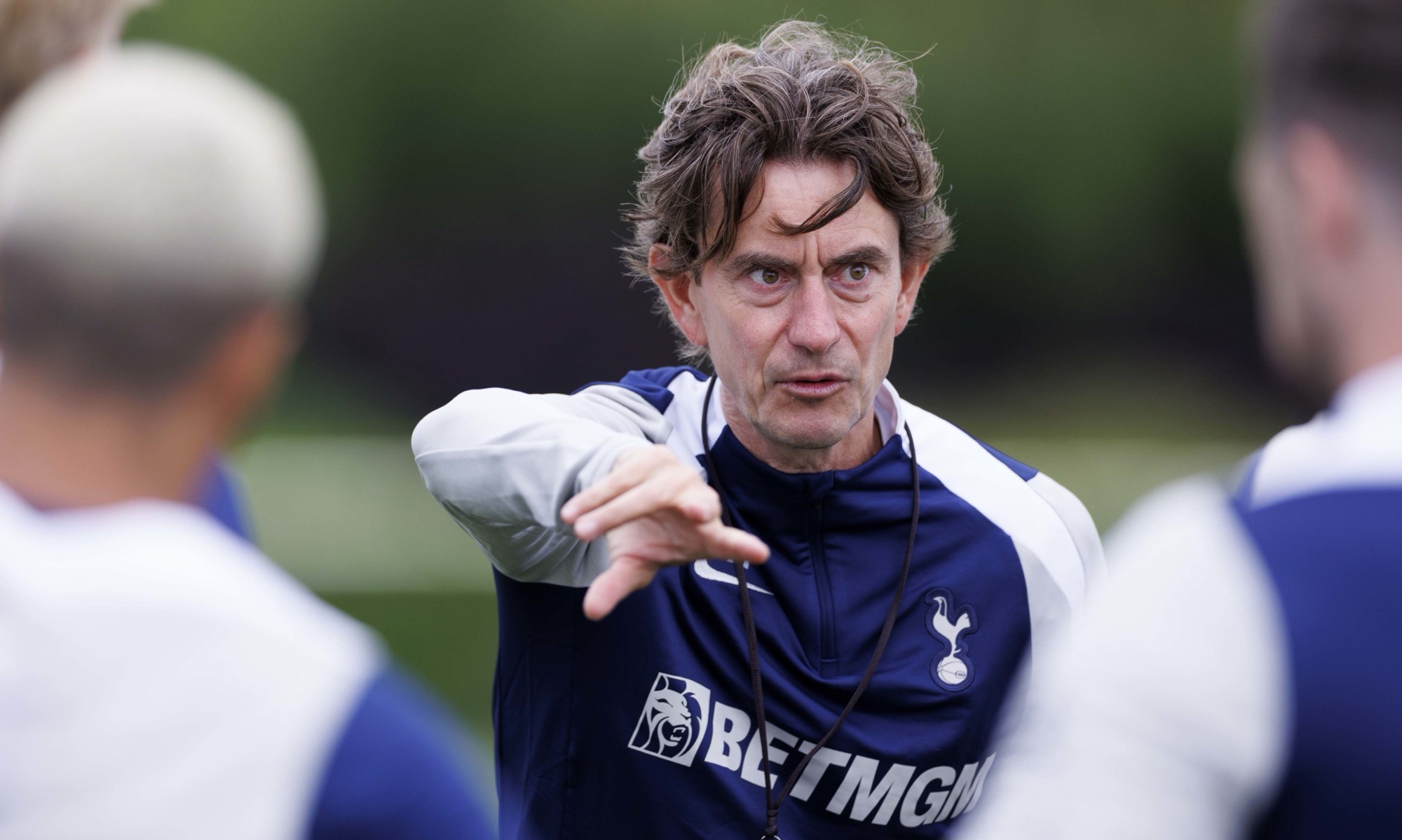
What Thomas Frank should look to do to fix the problem

Acknowledging the issues is one thing; fixing them is another. Here are actionable suggestions for Frank and Spurs to improve their striker/attacking output.
1. Boost chance-creation and open-play xG
The best way to improve the striker output is to give them more and better chances. Specific actions:
- Improve central penetration: The stats show Spurs struggle to progress play through the centre and create big chances. Frank should emphasise patterns of play that break lines rather than relying solely on wide or set-piece delivery.
- Increase big-chance creation: One article notes Tottenham have only created 13 “big chances” this season — one of the lowest in the league. The coach must design and rehearse attacking moves specifically aimed at generating big chances: overlapping runs, third-man exploitation, quick transitions.
- Improve off-ball movement of strikers: A good striker isn’t just finishing chances — they create them via runs off the ball, dragging defenders, opening space. Frank should ensure the strikers receive positional coaching to maximise their utility.
- Utilise pace and depth: With players such as Mohammed Kudus and Xavi Simons in the squad, integrating rotating front-line movement (false-nine, inverted runs) can confuse opposition defences and generate more chances.
2. Get the best out of Richarlison and options behind him
Given that Richarlison is arguably the present “lead” striker, Frank should maximise his strengths while managing his weaknesses:
- Build around his hold-up play and pressing: Early in the season, Richarlison showed good pressing and link-up. (Football Place+1) Using him in a system that allows him to drop slightly, bring others into play, and press high might unlock more from him.
- Manage his fitness and rotation: Given his injury history, planning for his substitution and impact role could preserve him and keep his output consistent.
- Provide complimentary forwards: Behind Richarlison, give him a partner or alternative (e.g., Solanke when fit) so opposition defences cannot simply nullify him. Rotation and freshness matter.
- Specific finishing training: Although his conversion is good relative to chances, the overall number of chances is low — so drilling movement, timing and runs inside the box should raise his volume.
3. Re-evaluate and/or reinforce the striker position
With Solanke injured and the output from the front line inconsistent, Tottenham must consider:
- Short-term loan or new signing: If Solanke is out for a while, bring in a forward who is proven at Premier League level (or similar) to relieve pressure.
- Tactical flexibility: Frank might adopt a two-forward system in games where Spurs dominate possession, to create more overloads centrally and increase chance volume.
- Succession planning: A longer-term plan to replace Kane didn’t yet clearly deliver — ensuring that the club identifies and integrates a natural “goal-getter” is essential. This doesn’t necessarily mean re-signing Kane (again), but rather a forward who can score 20+ goals over a season and consistently generate returns.
4. Turn set-pieces into bonus goals — but don’t rely solely on them
It’s worth noting that Spurs under Frank have been relatively solid defensively and have scored from set-pieces. But building a team that can score primarily from open play remains vital. Set-piece goals can act as supplementation. The reliance on dead balls is risky if open-play chance creation remains weak.
5. Monitoring and analytics-driven feedback
- Use expected goals (xG), expected assists (xA), and open-play shot quality metrics to monitor performance and identify weaknesses week-by-week. The data already reveals the issue; using it to guide training and tactical change will help.
- Track striker movement heat-maps, touches inside the penalty area, and “big chance” involvement. If the front line’s touches in the box per 90 remain low, then movement and positioning must be adjusted.
Conclusion
In summary, Tottenham under Thomas Frank are showing promising structural signs — defensively more compact, a clear identity emerging — but their front-line output from open play is a significant concern. The combination of low xG from open play, limited big-chance creation, the relative under-performance of the current strikers (and injury absences) means that Spurs are not leveraging their attacking personnel to full potential.
The departure of Harry Kane has undeniably left a void: his goals, presence and generation of space for others were major assets. While Spurs must move forward with new strikers and tactics rather than live off the memory of Kane, the fact remains that his exit exacerbated existing structural problems.
To fix this, the club must focus on creating more chances, getting the best out of Richarlison, reinvesting (if necessary) in the striker role, and using analytics to constantly refine their attacking patterns. If they do so, the early issues this season can be turned into opportunities for growth and stronger returns.