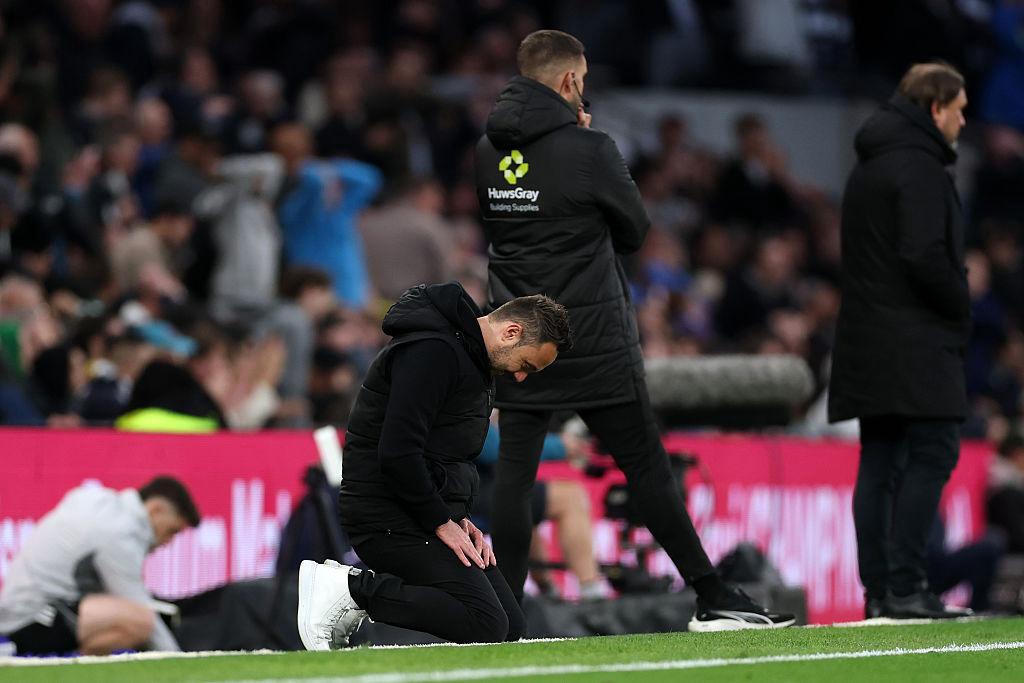
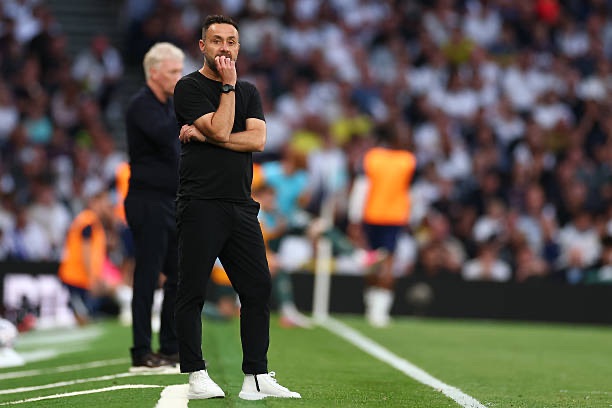
João Pedro strike hands Chelsea a clinical win in the London Derby as Spurs record season-low xG and a worrying end-of-game snub raises questions over Thomas Frank’s project.
The big picture
Chelsea left N17 with all three points after João Pedro finished off sustained pressure in the 34th minute, a strike that proved enough in a one-goal game. The Blues dominated possession and created the clearer chances; Tottenham, under new boss Thomas Frank, were toothless in attack and booed off by home fans at full-time. (Reuters+1)
Key moments
- 34′ — João Pedro (Chelsea): Moisés Caicedo’s pressing forced the turnover; Pedro finished clinically to give Chelsea the lead. Reuters and Chelsea’s official report highlight Caicedo’s role and Pedro’s composed finish. (Reuters+1)
- Full-time incident: TV footage showed centre-back Micky van de Ven and full-back Djed Spence walk past manager Thomas Frank without the usual acknowledgement, with Spence appearing visibly frustrated — an awkward moment Frank later described as player frustration but “one of the small issues.” (Talksport)
Match statistics (selected)
- Final score: Tottenham 0–1 Chelsea.
- xG: Tottenham 0.05 — Chelsea 2.92. Sky Sports and The Guardian emphasised how tiny Spurs’ xG was in the game. (Sky Sports+1)
- Shots (total): Tottenham 3 — Chelsea 15.
- Shots on target: Tottenham 1 — Chelsea 9.
- Possession: Tottenham 47.9% — Chelsea 52.1%.
- Saves: Tottenham keeper made 8 saves to keep the score down.
- Corners: Tottenham 6 — Chelsea 5.
(Full Opta/WhoScored breakdown showed Chelsea superior in tackles won, progressive passes and chances created — the numbers underline the gulf in chance quality between the two sides.) (chelseafc.com+1)
xG context — how bad was 0.05?
Tottenham’s 0.05 xG was not just poor — it was the lowest xG recorded by a Premier League team this season and, according to several outlets, the club’s lowest single-match xG since Opta began tracking those numbers. For broader context, the lowest single-match figure in Opta/available records remains tiny (StatMuse notes Leicester’s 0.02 xG vs Arsenal in February 2023 as one of the all-time minima). In short: Spurs’ attacking output on the night registered among the most anaemic xG totals seen in recent years. (Sky Sports+1)
Player & manager reaction

- Thomas Frank: At his post-match press conference Frank accepted the boos and conceded Spurs were “second best”, blaming lack of energy and inability to deal with Chelsea’s high press. He downplayed the full-time corridor moment as frustration from players who care about performing. (Talksport+1)
- Micky van de Ven / Djed Spence: There were no extended on-camera interviews from either Van de Ven or Spence after the final whistle, but the TV footage of them appearing to snub or ignore Frank has become the most viral image from the night. The body-language clip — van de Ven walking past without acknowledgement and Spence visibly gesturing — has been interpreted widely as raw player frustration rather than calculated dissent. TalkSport and social video captures reported the incident within minutes. (Talksport)
(Previously, both players had spoken positively about Frank during pre-season and earlier this campaign — that history makes the night’s visuals more striking rather than definitive proof of a breakdown.) (TBR Football+1)
Fans: from patience to uncertainty
The Tottenham crowd’s reaction — loud boos at half-time and full-time — was a recurring theme in coverage. Journalists and columnists noted growing impatience: the style under Frank had earned praise earlier, but a string of limp home performances (and the derby loss at Wembley atmosphere) has fed a new strain of uncertainty. Headlines and social timelines after the match shifted from tactical debate to wider questions: can Frank’s pragmatic approach be made acceptable to a vocal fanbase used to attacking identity, and are the current results sustainable if performances remain this flat?
Tactical Analysis
1. Formations & starting structure

Chelsea (under Enzo Maresca) arrived in a system that emphasised control and transition threat. They effectively used a 4-3-3 (or 4-2-3-1 variant) structure:
- Midfield trio (including Moisés Caicedo and Enzo Fernández) tasked with press + recovery & supplying forward runners.
- Full-backs / wide players offered attacking width, but when defending they shift to a compact block (often resembling 5-4-1 once goal up).
- Attack: João Pedro central, supported by wide forwards / inside-forwards.
Tottenham Hotspur (under Thomas Frank) set up with a back-four (e.g., Micky van de Ven as key centre-half), two central midfielders, and a front 3/4. The ambition was to press high and show aggressive transitions, but against this Chelsea side the structural weaknesses became glaring.
2. Key tactical themes & battles
a) Chelsea’s press and turnover creation
One of the defining moments: Caicedo dispossessed van de Ven at the edge of Spurs’ box, then fed João Pedro for the goal. That indicated how relentlessly Chelsea pressed in Spurs’ half and targeted the centre-back → midfield link. The Guardian live coverage highlights the turnover chain. (The Guardian)
Chelsea’s structure forced Tottenham into hurried passes. Tottenham only managed 0.05 xG for the match — indicative of both a lack of clear chances and poor progression.
b) Tottenham’s lack of progression and attacking fluency
Spurs struggled to move the ball meaningfully from defence through midfield into attack. Because Chelsea compressed the midfield and used the press to cut off passing lanes, Spurs had to resort to long balls or isolated carries. As a result: only 3 shots total (1 on target).
Their full-backs (e.g., Djed Spence) were often pinched between “go forward” and “recover back” tasks; Chelsea’s wide pressing blocked the forward option and left Spurs vulnerable on counters.
c) Wide zones and overloads
Chelsea exploited wide areas fairly well. When Spurs full-backs ventured, the wide Chelsea attacker or wing-back created overloads or pulled the covering Spurs wide defender out of shape. This freed up space centrally for Caicedo/Enzo Fernández to drive or feed João Pedro.
Spurs, conversely, failed to generate consistent overloads or exploit their wide men. Their flank play lacked penetration, meaning Chelsea could defend more narrowly and deny space inside.
d) Game management and defensive transition
Once Chelsea took the lead, they dropped into a compact shape, nullifying Spurs’ attacking outlets. According to one pre-match tactic analysis, Chelsea have been shifting into a “5-4-1”-ish shape in the late stages when ahead. (The Pride of London+)
Spurs lacked answers when chasing. They were unable to stretch Chelsea enough; their shifts lacked tempo and the passes into the final third were inaccurate or easily intercepted.
3. What went right for Chelsea
- Strong press with clear triggers and midfield penetration.
- Efficient use of transition: the goal was from a turnover in a central zone.
- Defensive solidity once ahead: limited Tottenham’s shots and chances, kept their xG low for Spurs.
- Tactical flexibility: sense of when to press high vs when to sit deeper.
4. What went wrong for Tottenham
- The extremely low xG (0.05) is symptomatic of a team failing to create quality chances — the worst for a league team this season in the context.
- Centre-back linking with midfield was poor: van de Ven’s involvement in the turnover that led to the goal is telling.
- Too predictable and lacking width/variation in attack: no meaningful penetrative passes or overloads.
- Full-back/wing-back role confusion: when Spence or Porro advanced, Chelsea seemed ready to punish in transition.
- Mental/physical sharpness: Frank admitted his side lacked freshness. That showed in the speed of movements, first touches, decision-making.
- The post-game body-language (Van de Ven & Spence’s snub of Frank) hints at a possible confidence/communication issue within the squad.
5. What this means for the project under Thomas Frank
- The overall style (solid defence, pragmatic attacks) is visible, but fans’ patience is wearing thin because the attacking end is inert.
- The lack of ‘moments’ — no effective wide play, little creative spark — means Spurs look like a mid-table team rather than a top-4 contender, despite lofty league position.
- If this level of performance continues, the identity becomes “safe but uninspiring” which may not satisfy the ambition or the fanbase.
- Internal relationships matter: if key players (van de Ven, Spence) appear disengaged publicly, that undermines the unity/lead-by-example message.
- Next step: Frank needs to tweak the forward structure (perhaps change wide roles, improve progression from midfield) and restore energy/urgency.
- Also, home results are the concern — dominating possession at home, yet few chances and low xG — the project must flip that statistic.
6. Tactical tweaks & outlook
For Spurs to improve:
- Introduce a more dynamic attacking pivot: a 10- or wide attacker who can rotate, invert, create overloads.
- Improve midfield linking: ensure one midfielder drops deep to collect and another bursts forward; organise the CB-mid link so turnovers like Caicedo’s are less likely.
- Balance full-back attacking vs defensive duty: instruct full-backs to stay slightly narrower/higher when possession to avoid being outnumbered on transitions.
- In the chasing phase, switch to a more aggressive shape: perhaps 3 central backs + 2 wing-backs to increase attacking width and overloads, rather than keep trying with the back-four.
- Address psychological/work-rate issues: quicker tempo in training, sharper pressing triggers, restore belief in transitions attacking.
For Chelsea to build further:
- Continue using press from midfield and central zones to provoke turning situations.
- When ahead, retain the compact 5-4-1-ish shape to limit opportunities rather than chasing further risk.
- Work on final-third conversion: despite high xG they didn’t score more than one — to push top-4, they’ll need to convert more.
- Reliable squad depth will allow rotation without drop in pressing intensity (important given fixture congestion).
7. Conclusion
This game was a tactical statement by Chelsea: press, turnover, quality chance, and then disciplined defence. For Tottenham, the performance raised as many questions as the defeat itself did: how do you unlock and create legitimate chances? And how do you maintain player belief and cohesion when the style is showing cracks?
For Thomas Frank’s Tottenham project, the blueprint remains sound — defensive organisation, pragmatic approach — but the attacking blueprint needs urgent refinement before the ambition (top 4, challenging) becomes credible rather than aspirational.
What it means for the season
- Tottenham: A damaging statistical night. The result and the underlying numbers (0.05 xG, three shots, one on target) suggest Frank’s side can be dominated by high-pressing, transition teams — a worrying trait if it becomes a pattern at home. The public snub footage amplifies pressure on the manager to restore buy-in quickly. (Sky Sports)
- Chelsea: The win — and the 2.92 xG — will feel like strong evidence of progress under Enzo Maresca, with midfield pressing and chance creation rewarded by the solitary, but deserved, goal. (Reuters)
Bottom line

This was a night of two stories: Chelsea’s clinical control and Tottenham’s offensive impotence. João Pedro’s goal was the simple, decisive action in a game Chelsea overwhelmingly deserved to win. But the narrative that will stick around the Spurs camp is less about one striker and more about why two of the club’s most reliable performers were caught on camera looking off-key with their manager at the final whistle — and what that visual means for Thomas Frank’s project at a club whose supporters have little patience for prolonged underwhelming home displays.