




Vinai Venkatesham has outlined his ambitious vision for Tottenham’s future, insisting the club wants to win the Premier League and Champions League while revealing the emotional impact of last season’s relegation battle.
Tottenham Hotspur chief executive Vinai Venkatesham has delivered a significant update on the club’s ambitions, future direction and recent struggles during an exclusive appearance on The Sports Agents podcast.
The Spurs chief, who previously held the position of chief executive at Arsenal, was speaking about the club’s journey through one of the most difficult periods in its recent history, the appointment of Roberto De Zerbi and the changes taking place behind the scenes.
His comments will undoubtedly attract attention from Tottenham supporters, particularly given the extraordinary contrast between the club’s ambitions and its performances over the last two Premier League campaigns.
After finishing 17th in consecutive seasons and narrowly avoiding relegation to the Championship in 2025/26, Venkatesham has made it clear that simply returning to European football is not the ultimate objective.
Instead, Tottenham want to compete for the biggest prizes in English and European football.
Vinai Venkatesham sets out Tottenham’s Premier League and Champions League ambitions
Perhaps the most significant part of Venkatesham’s interview came when he was asked about what Tottenham are ultimately trying to achieve.
Rather than setting modest objectives following the club’s recent struggles, the chief executive delivered a bold response, explaining that winning trophies must be at the centre of everything Tottenham do.
He said:
“Ultimately, I guess the best way to answer your question is what are we here for? We’re here to win, right? The people that we’ve attracted to the football club, the long list of people, everyone is here to win.
“If you work for Tottenham, when we talk about being here to win, that means we’re here to win the Premier League. That’s what this football club wants to do.
“It wants to win the Premier League and it wants to be consistent in the Champions League and it wants to ultimately win the Champions League.
“Can I tell you what year that’s going to happen in? Obviously I can’t but that’s what we’re aiming for and that’s what I want every single person that works for this club to think about every single day.
“I want them to never settle and I want us to be completely relentless in that pursuit.”
These are certainly ambitious words from the Tottenham chief executive.
For a club that has spent recent seasons struggling to establish consistency in the Premier League, the suggestion that winning the Champions League is an ultimate objective represents a significant statement of intent.
However, supporters will understandably want to see those ambitions translated into action.
Tottenham have the stadium, training facilities, commercial infrastructure and global following to become one of Europe’s leading football clubs. The question has always been whether the footballing operation can consistently match those resources.
Venkatesham appears determined to make that the central focus of his leadership.
Venkatesham admits Tottenham’s relegation battle was traumatic
Another important part of the interview concerned Tottenham’s disastrous 2025/26 campaign.
Spurs endured an extraordinarily difficult season, finishing 17th for the second consecutive year and finding themselves in a genuine relegation battle that went down to the final day.
Roberto De Zerbi eventually guided Tottenham to Premier League survival with a 1-0 victory over Everton, a result that also condemned West Ham United to relegation.
Reflecting on the experience, Venkatesham admitted just how challenging the situation had become.
He said:
“It was really challenging, a really, really challenging period for the club.”
The chief executive was also asked whether Tottenham had prepared for the possibility of relegation.
His response was particularly revealing:
“Yeah, you have to. You can’t not.”
He continued:
“To not make that plan would have been irresponsible. When I look back at that period, I take probably two things.”
Venkatesham then highlighted the importance of Tottenham’s supporters during the closing stages of the campaign.
He said:
“I think our supporters were unbelievable. The last six or seven games, when they had faced probably the worst season they have ever faced, they got completely behind the team and the head coach and dragged us over the line. This is not normal.”
He also suggested that experiencing such a difficult period could ultimately bring people at the football club closer together.
“The second thing is sometimes going through something as traumatic as we went through last season bonds people. It puts even more fire in everyone’s belly to make sure something like that never happens again.”
The admission that Tottenham had prepared for relegation is particularly significant.
It demonstrates how seriously the situation was being treated internally and how close the club came to experiencing a financial and sporting setback that could have affected its long-term plans.
For supporters, the priority now is ensuring that such a situation never happens again.
Roberto De Zerbi and the beginning of a new Tottenham era
A major part of Tottenham’s attempted rebuild has centred around Roberto De Zerbi.
The Italian arrived during the closing stages of the previous campaign, inheriting an extremely difficult situation and the responsibility of keeping Tottenham in the Premier League.
His arrival followed the disappointing periods under Thomas Frank and interim manager Igor Tudor.
De Zerbi ultimately delivered the results required to preserve Tottenham’s top-flight status, and Venkatesham believes the manager has provided the club with a renewed sense of belief.
The chief executive has previously described De Zerbi’s impact as extraordinary, highlighting his influence within the dressing room and his suitability for the style of football Tottenham want to play.
His appointment is also an important part of the club’s wider ambitions.
Tottenham need a manager capable of developing players, improving performances and building a team capable of challenging the established Premier League elite.
De Zerbi’s footballing philosophy and experience make him a central figure in the club’s plans.
However, the responsibility cannot rest entirely on the manager.
He needs the backing of the board, an improved recruitment structure and a squad capable of executing his ideas.
That is where Venkatesham and the club’s football leadership will face their biggest test.
The Daniel Levy era: How Tottenham’s running of the club unfolded

To understand the significance of Venkatesham’s latest comments, it is important to examine how Tottenham reached this position.
For almost 25 years, Daniel Levy was one of the most influential figures at Tottenham Hotspur.
Under his leadership, the club underwent an extraordinary transformation away from the pitch.
Tottenham developed into one of the most commercially successful clubs in English football, moved into a state-of-the-art stadium and established an impressive training facility.
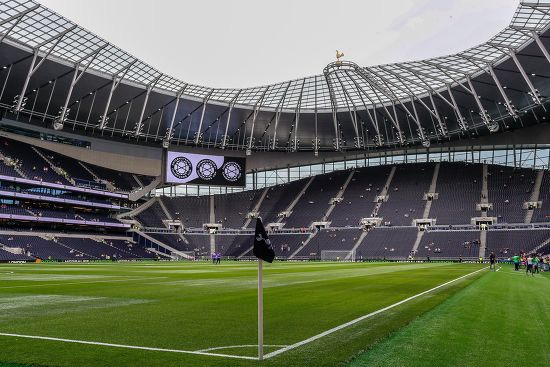
The new Tottenham Hotspur Stadium became one of the biggest achievements of the Levy era, providing the club with an infrastructure that many European rivals could only envy.
Commercially, Tottenham also made significant progress.
The club increased its global profile, expanded its revenue streams and became a major sporting and entertainment business.
However, the relationship between the club’s off-field achievements and its footballing success became an increasingly controversial subject.
Despite the financial growth and infrastructure investment, Tottenham struggled to establish themselves as consistent trophy challengers.
The club’s last major trophy before its 2025 Europa League triumph was the League Cup in 2008.
The 2019 Champions League final defeat to Liverpool represented a huge opportunity, but Tottenham were unable to take the final step.
There were also repeated managerial changes, recruitment difficulties and questions about the overall direction of the football operation.
Mauricio Pochettino’s departure in 2019 marked the end of a particularly promising period, with Tottenham subsequently moving through several managerial appointments in an attempt to rediscover their identity.
The appointments of Jose Mourinho, Nuno Espirito Santo, Antonio Conte and Ange Postecoglou highlighted the club’s changing footballing direction.
Postecoglou eventually delivered the Europa League trophy in 2025, ending Tottenham’s 17-year wait for silverware.
However, that achievement was followed by a disappointing Premier League campaign and another 17th-place finish.
Daniel Levy departed his position in September 2025 after almost a quarter of a century at the club, bringing an end to an era that delivered enormous commercial and infrastructural growth but ultimately left supporters questioning whether enough had been done to achieve sustained footballing success.
Venkatesham’s internal review exposed significant problems
Following his arrival in June 2025, Venkatesham began reviewing how Tottenham operated behind the scenes.
His findings were particularly interesting because they suggested that the club’s problems extended much further than the first-team performances.
In a previous interview with BBC Sport in May 2026, he explained that he had initially expected Tottenham to be competing for European qualification.
However, after spending time inside the organisation, his assessment changed considerably.
He said:
“If you’d have asked me a few months after I joined, when I was no longer an outsider, I would have told you the club was in a significantly worse state in some places than I thought.”
He added that Tottenham required something much more substantial than a simple turnaround.
“It was really a complete reset.”
One of his most revealing observations concerned the difference between Tottenham’s commercial operation and its footballing structure.
He explained that the club remained extremely strong in areas such as stadium operations and commercial development.
However, he believed the footballing department had fallen behind other Premier League clubs.
He said:
“I don’t think that there was what I would call a relentless obsession with football success.”
That is an extraordinary admission from the chief executive of a club that has spent billions developing its infrastructure and establishing itself among the biggest names in English football.
Venkatesham also questioned the environment at Tottenham’s training centre, despite acknowledging its quality.
“Our training centre is amazing, one of the best, if not the best in the world. But when you look around, it looks more like a five-star hotel than it does a performance environment.”
He indicated that changes would be made to create a more performance-focused environment.
He also suggested that Tottenham lacked the necessary expertise in certain areas of the organisation.
The comments were widely interpreted as a criticism of the previous leadership structure, although Venkatesham was careful to explain that he was describing what he had found rather than directly criticising individuals.
The controversial decisions that contributed to Tottenham’s struggles
The previous campaign also exposed problems with decision-making at the highest level.
Thomas Frank’s appointment was supposed to provide Tottenham with stability and a clear footballing direction.
However, performances deteriorated, results became increasingly difficult to obtain and supporters began demanding a change.
The eventual decision to dismiss Frank attracted criticism because many believed the club had waited too long.
Venkatesham defended the decision-making process, insisting Tottenham had not been passive and that several factors had been considered.
The club also explored appointing Roberto De Zerbi earlier, but the Italian was initially unwilling to take the job midway through the campaign.
That led Tottenham towards Igor Tudor.
The Croatian was appointed as an interim solution but his spell proved unsuccessful, lasting just seven matches.
Venkatesham admitted that the appointment carried significant risk.
He said:
“But of course we were really aware he had no Premier League experience. Was it a risk in appointing him? Absolutely.”
When asked whether the appointment had been a mistake, his response was:
“It didn’t work out. I think it’s very clear it didn’t work out. And I don’t think that is in question. I don’t think anybody would argue anything else.”
It was an honest acknowledgement that the decision had failed.
However, it also highlights the scale of the problems Tottenham have experienced when attempting to make important footballing decisions.
The club cannot afford another season of uncertainty, particularly with the expectations now being placed on De Zerbi and the new leadership structure.
What does Venkatesham’s interview mean for Tottenham supporters?
There is no doubt that Venkatesham is attempting to establish a different culture at Tottenham.
His latest comments suggest that the club’s ambitions are no longer being framed around simply qualifying for Europe or maintaining its position among the Premier League’s established sides.
The stated objective is to win the biggest trophies.
That is exactly the sort of ambition supporters want to hear.
However, there is an important distinction between ambition and execution.
Tottenham have spent years developing the infrastructure required to become a major force in European football.
Now they need to demonstrate that the footballing side of the organisation can deliver the same level of progress.
The club must recruit more effectively, establish a clear footballing identity, retain its best players and provide De Zerbi with the resources required to build a competitive squad.
There also needs to be greater accountability when decisions do not work.
Venkatesham has inherited an organisation that he believes required a complete reset, but the responsibility for delivering that reset now rests with the current leadership.
Supporters will not judge the new regime purely on interviews or ambitious statements.
They will judge it on performances, results, recruitment and, ultimately, trophies.
Tottenham need to turn ambitious words into action
Vinai Venkatesham’s latest interview provides an insight into how Tottenham Hotspur want to operate moving forward.
The chief executive has openly discussed the club’s traumatic relegation battle, acknowledged the need to learn from recent mistakes and outlined ambitions that stretch all the way to winning the Champions League.
There is a clear message: Tottenham do not want to settle.
But after years of frustration, inconsistent footballing decisions and a painful decline in Premier League performances, supporters are entitled to demand evidence.
The foundations are there. The stadium is world-class, the commercial operation is strong and the club has the global profile to attract elite players and managers.
What Tottenham now need is a footballing operation capable of matching those foundations.
De Zerbi has been handed the responsibility of leading the team forward, while Venkatesham and the ownership must ensure that the decisions made away from the pitch finally support the ambitions being discussed publicly.
Winning the Premier League and Champions League may seem a distant prospect given where Tottenham have been recently.
However, if the club genuinely wants to reach those heights, the rebuilding process must start with consistent decisions, proper investment and a clear commitment to footballing success.
Spurs supporters have heard the promises. Now they want to see the results.